Pop songwriting has long leaned on the chorus as its emotional anchor. It’s the section designed to linger, repeat, and reward familiarity. Strip that away, and most songs risk sounding unfinished or forgettable. Yet rock music has always had a habit of bending the rules, especially when structure threatens to get in the way of atmosphere, storytelling, or tension.
Across the late ’60s and ’70s in particular, some artists chose to build songs around evolving verses, instrumental shifts, or lyrical momentum instead of a traditional refrain. These tracks don’t circle back to a familiar hook; they move forward, pulling the listener along without ever stopping to reset. What they lack in repetition, they make up for in mood, narrative, and a sense of inevitability that keeps them compelling from start to finish.
Interestingly, many of these chorus-free songs didn’t arrive as obvious hits. Some weren’t pushed as singles at all, and a few took years to earn their reputation. Over time, though, they became staples—songs fans know by heart despite having no central line to shout along to. They stand as reminders that memorability isn’t always about repetition, and that sometimes the boldest choice is refusing to follow the formula altogether.
“All Along the Watchtower” by The Jimi Hendrix Experience (Electric Ladyland, 1968)
Originally written by Bob Dylan, “All Along the Watchtower” found its most enduring form when Jimi Hendrix recorded it during the Electric Ladyland sessions. Hendrix was working from a reel-to-reel tape of Dylan demos, and this song stood out for its stark imagery and open-ended structure. Released in 1968, it quickly became one of Hendrix’s defining recordings.
What’s striking is how rarely listeners notice the absence of a chorus. The song moves through a series of tense, cyclical verses, driven by layered guitars and an unsettled rhythm. Hendrix’s phrasing, combined with the constantly shifting instrumental backdrop, creates a sense of momentum that replaces the need for a repeated hook.
Rather than anchoring itself to a refrain, the track relies on atmosphere and escalation. Each verse feels like another turn of the wheel, pulling the listener deeper into its cryptic world. That forward motion is precisely what makes the song feel complete, even without a traditional payoff.
“Paranoid” by Black Sabbath (Paranoid, 1970)
“Paranoid” emerged almost by accident. Written quickly to fill space on Black Sabbath’s second album, the song was never intended to be a centerpiece. Its short runtime and direct approach made it an unlikely candidate for long-term impact, yet it became the band’s breakthrough hit.
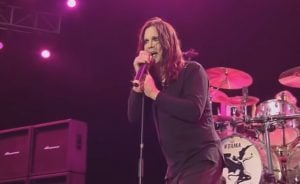
Despite its reputation as a metal anthem, the song doesn’t rely on a chorus to lodge itself in memory. Instead, it cycles through urgent verses and a blunt, repetitive guitar figure that serves as the song’s backbone. Ozzy Osbourne’s vocal delivery reinforces that restless energy, keeping the focus on mood rather than structure.
Over time, “Paranoid” proved that immediacy could outweigh convention. Its stripped-down design and relentless pace gave it a raw appeal that still resonates decades later, showing how a song can be unforgettable without ever stopping to repeat itself.
“Wish You Were Here” by Pink Floyd (Wish You Were Here, 1975)
The title track of Wish You Were Here occupies a unique place in Pink Floyd’s catalog. Released in 1975, it became one of the band’s most widely recognized songs, connecting with listeners well beyond the progressive rock audience. Its themes of absence and disconnection gave it a universal emotional pull.
There’s no chorus guiding the listener back to a central line. Instead, the song is built around a repeating acoustic motif that gently anchors the entire piece. That familiar guitar figure acts as a point of return, even as the lyrics move through different emotional shades.
The result feels intimate rather than incomplete. By avoiding a chorus, the song maintains a conversational tone, as if the narrator is thinking aloud. That restraint is part of what has allowed the track to remain timeless and deeply personal for generations of listeners.
“Bohemian Rhapsody” by Queen (A Night at the Opera, 1975)
Few songs challenge traditional structure as boldly as “Bohemian Rhapsody.” Released in 1975, it defied radio norms with its length, shifting sections, and operatic ambition. Against all expectations, it became a massive hit and remains one of the most celebrated recordings in rock history.
There’s no space for a chorus because the song never settles into one place for long. Instead, it unfolds in movements—ballad, opera, hard rock—each flowing into the next without repetition. The absence of a refrain allows each section to feel essential rather than ornamental.
What makes the song endure is its sense of purpose. Every transition feels deliberate, every change earned. By abandoning the chorus entirely, Queen created a piece that feels more like a journey than a song, proving that structure can be rewritten without losing mass appeal.